




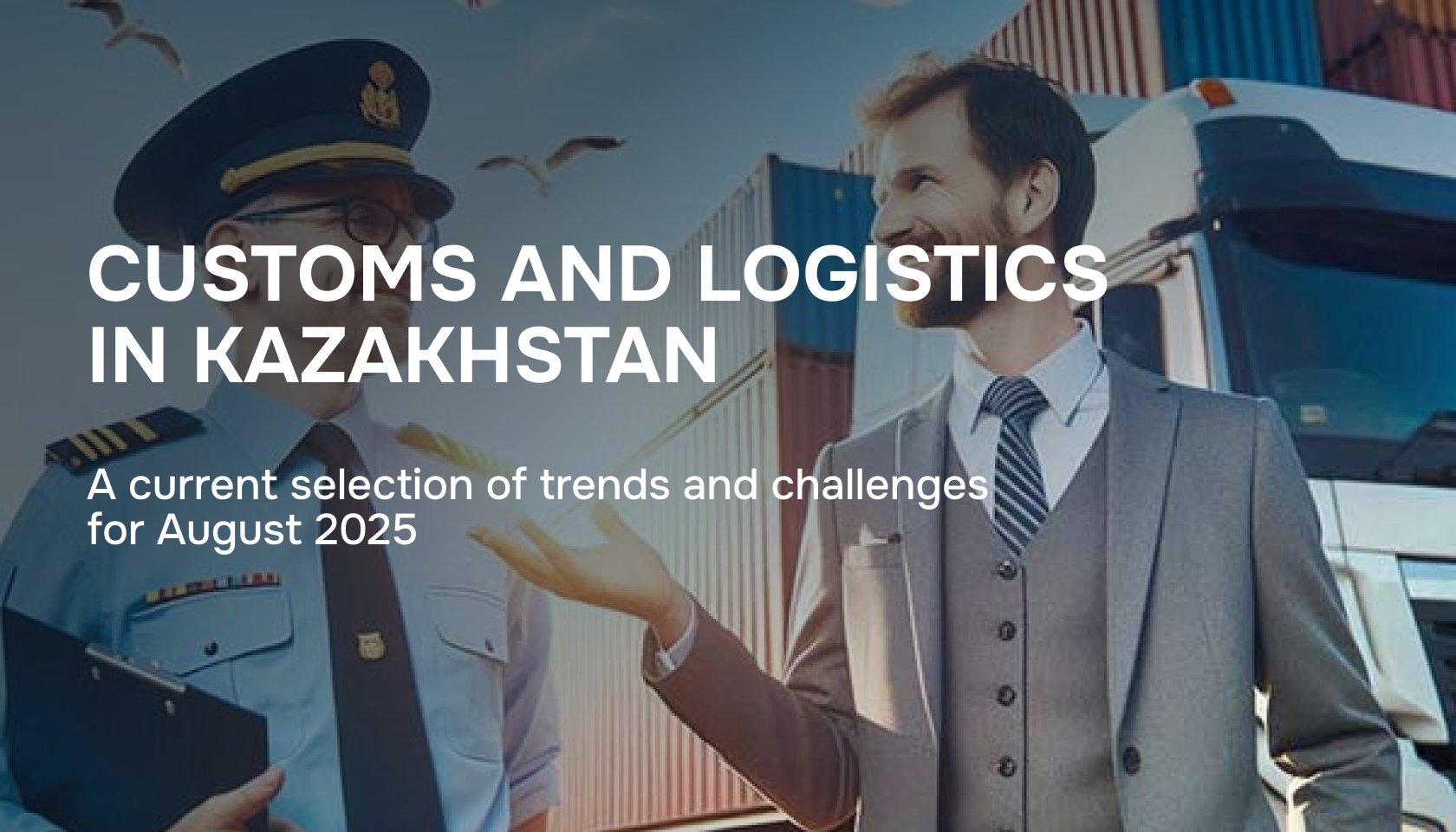
Since the beginning of 2025, Kazakhstan has been actively strengthening its role as a key transit hub between China, EAEU countries, and Europe. Amid geopolitical shifts and sanctions policies, alternative routes through Kazakhstan — including the Trans-Caspian International Transport Route (TITR) — have gained priority.
Key Challenges:
- Overload of railway infrastructure
- Shortage of containers and rolling stock
- Rising transportation costs
Government Response:
- Continued digitalization of logistics and implementation of e-TTN (electronic waybill)
- Expansion of logistics hubs in Almaty, Aktobe, and West Kazakhstan regions
Customs Changes and Current Regulations
In 2025, import controls have tightened, particularly due to:
- Parallel imports
- Stricter product labeling requirements
- Anti-smuggling measures at southern borders (China, Kyrgyzstan, Uzbekistan)
Major Updates:
- Introduction of a new Early Alert System for importers
- Increased inspections for goods moving through green and blue corridors
- Implementation of automated declaration risk assessment using Big Data analytics
Domestic Logistics Challenges for Businesses
Small and medium-sized enterprises (SMEs) are facing several issues:
- Border delays (especially at Khorgos and Saryagash checkpoints)
- Complications in obtaining certificates of origin and veterinary/phytosanitary documents
- Logistics cost increases of 20–30% over the past six months
What Helps Businesses:
- Outsourcing logistics and customs clearance
- Transitioning to multi-warehouse models and consolidation hubs
- Cooperation with logistics marketplaces
Labeling and Traceability
The product labeling system under the National Product Catalogue (Kazakhstan’s equivalent of Russia’s “Honest Sign” system) continues to expand.
Currently mandatory labeling:
- Alcohol
- Tobacco products
- Footwear
- Dietary supplements
- Textiles
Mandatory labeling for electronics and children’s goods is planned for 2026.
International Trends and Their Impact on Kazakhstan
- China is increasing railway capacity, including modernization of the Alatau–Khorgos hub
- The European Union is tightening controls on product origin and carbon footprint reporting
- Russia is strengthening internal trade barriers within the EAEU (e.g., excise goods regulations)
Business Recommendations for August 2025
- Review logistics routes considering potential delays and congestion risks
- Invest in digitalization: cargo tracking, electronic document management, integration with IS SFEU and ESF systems
- Work with reliable customs brokers and 3PL providers
- Monitor new regulations, particularly those related to labeling, sanitary control, and export compliance
ICS Logistics


